Interior Painting Contractors in NJ
The right interior painting company can dramatically transform your home or workplace. Professional painters use high-quality materials and proven techniques to deliver a smooth, clean, and long-lasting finish.
Professional interior painters can handle projects of any size, whether you need one room painted or want to refresh an entire home or commercial building.
Interior Painting Services
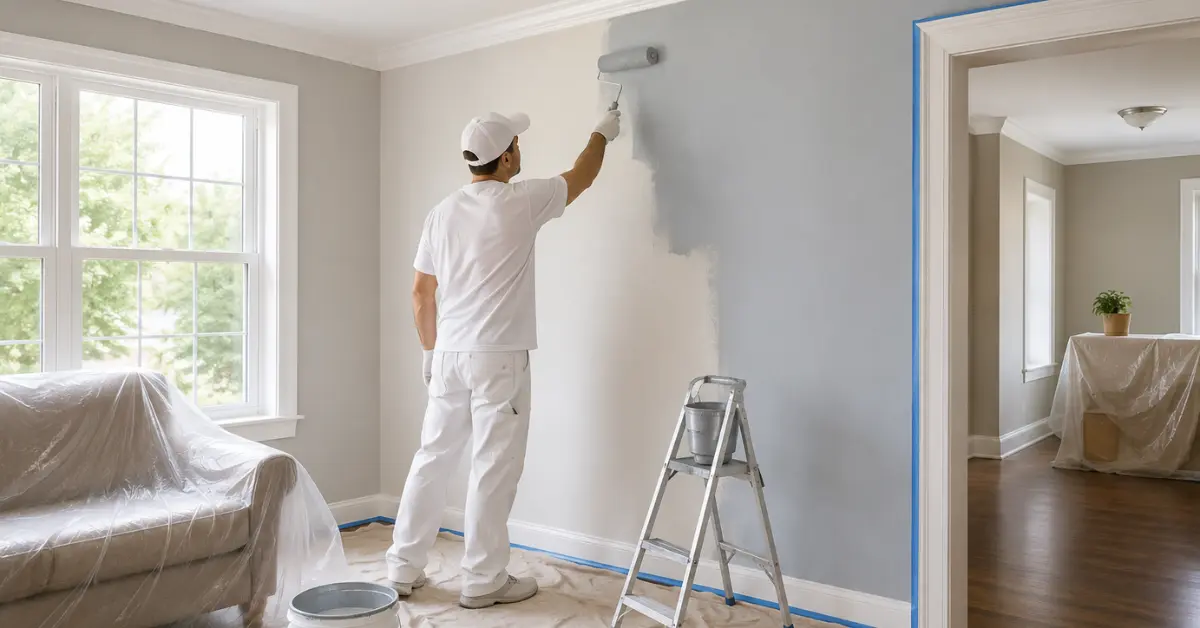
NJ Painting Services provides different type services. Through our interior painting services, you will be able to revitalize your living or work environment through painting. This is done by paying particular attention to the following aspects: proper surface preparation, applying the paint, and being meticulous in the process.
We can do all kinds of work on your property, from little paint jobs to complete interior renovations. For our services, we use quality paint and techniques in order to provide a smooth surface while making sure that the process is organized and convenient.
Interior House Painting
Interior house painting can be considered the simplest way to renovate your place and add a new touch to your interior design. Whether you need to paint one room or an entire house, you will certainly find our services useful.
Our interior & exterior house painting process is a full service that includes complete preparation and detailed painting of walls, ceilings, doors, trim, and all other interior surfaces. We pay close attention to every detail to help create a clean, even, and long-lasting finish that complements your home’s style.
Interior Painting Company: Beautify Your Interior Space with Specialized Paints
A fresh paint job can transform any room. Our clients’ expectations have always been exceeded because we provide painting services with meticulous attention to detail. From small projects involving a single room to major renovations involving the remodeling of the entire house or office, we accept any work. We achieve the desired results as we only choose quality paints that guarantee beauty and durability.
Commercial Interior Painting Company
We are an expert interior company painting, that also provide Exterior and commercial painting services of the highest standard. Every business has different expectations, and we adapt to them and provide what they need. We cover the spectrum of style from bright colors that can charm retail customers to neutral shades that have a calming influence in offices.

Residential Interior Painting Services
Our skilled interior residential painters treat your walls, ceilings, and even cabinets with the utmost care and detail, ensuring that they look fresh and stunning at all times. We prepare the surfaces with the most suitable fillers, shaders, primers, baseboards, and trims, ensuring a spotless and even finish. Protection of your furniture is our height of importance as we aim to remove as much disruption from your day-to-day routines as possible.
Our professional interior painting and interior residential painting solutions are designed to give your property a clean, attractive, and long-lasting finish.
Our Professional Interior Painting Process
A good paint job is settled long before the first coat goes on. This is how an interior project runs from the first call to the last wipe-down, so you know what happens at each stage.
Initial Consultation and Painting Estimate
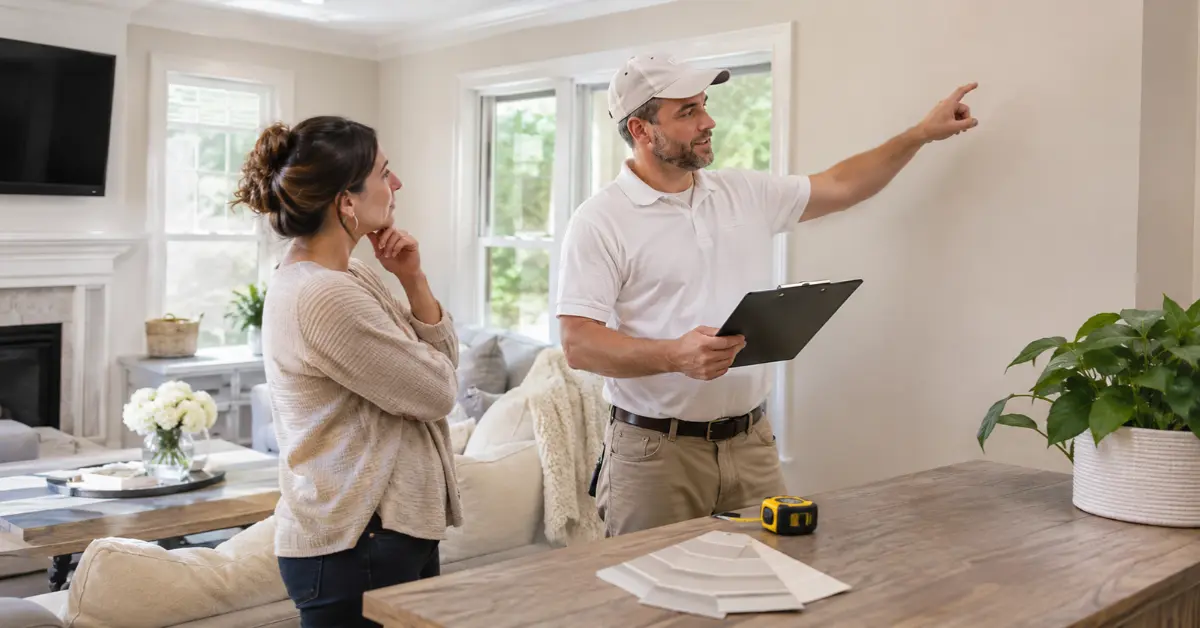
Everything starts with a conversation about what you want. Which rooms are being painted, and do the ceilings, trim, and doors come along? Are you freshening a color you already like or making a bold change? We walk through each room, look at the walls and other surfaces, and talk about colors and finishes, including how much natural light the space gets and how the room is used. The scope is then put in writing, together with an estimate that says what is included and what is not.
On-Site Assessment and Surface Preparation
Before any paint can is opened, the walls and ceilings get a close look: cracks, nail pops, water stains, peeling spots, and rough patches left by earlier repairs. What turns up decides how much preparation each room needs.
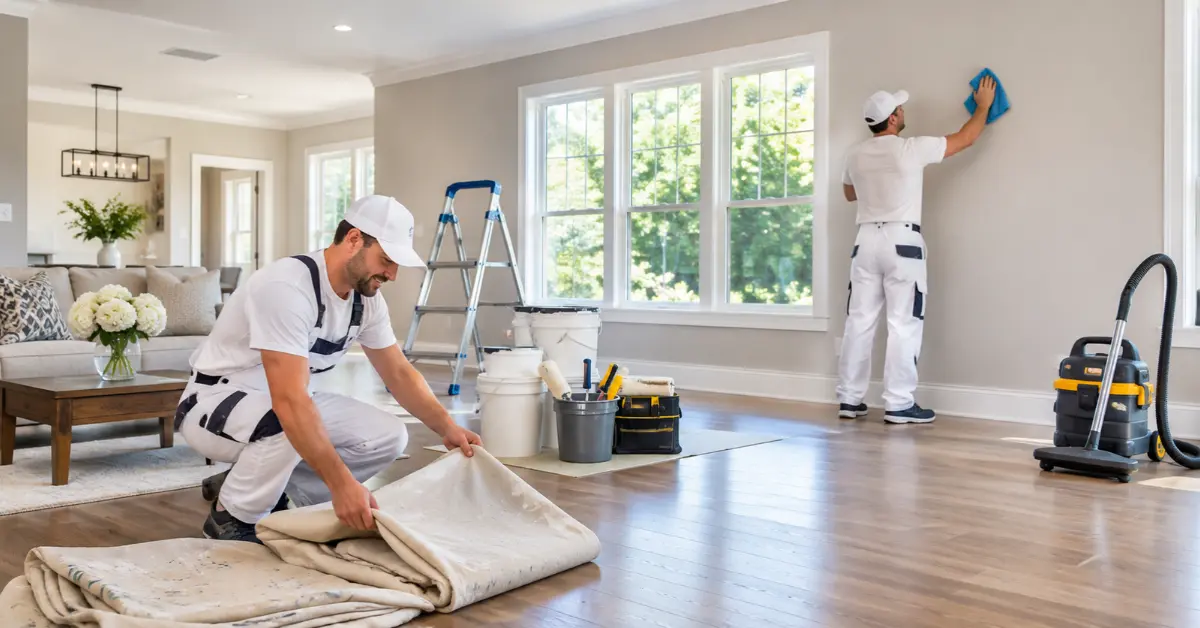
Furniture is moved to the middle of the room and covered, floors are protected, and outlet covers, switch plates, and edges are removed or masked. After that the surfaces are cleaned, repaired, and sanded so the paint has something sound to grip. The specifics of that work are covered in the next section.
Professional Painting and Final Cleanup
Primer goes on wherever it is needed, such as over repairs, stains, bare patches, or a big jump from a dark color to a light one. Paint is then applied in even coats, usually ceilings first, then walls, then trim and doors, with clean lines cut in at corners and edges. Each coat gets time to dry before the next.
When the painting is finished, the work is checked in good light and touched up where it falls short. Masking comes off, the work area is cleaned, and the room is put back together so you can use it again.
Interior Wall Preparation Before Painting
Paint can only look as good as the surface under it. Skipped or rushed preparation is the most common reason an interior paint job peels, looks patchy, or shows every flaw once the light changes. Proper preparation covers these steps:
- Cleaning the walls. Dust, cooking grease, and fingerprints stop paint from bonding. Kitchens and hallways usually need the most attention. Walls are washed, rinsed, and left to dry completely.
- Filling cracks and holes. Nail holes, dents, and hairline cracks are filled with the right compound, left to cure, and sanded flush. A crack that keeps coming back can point to movement or moisture, which is worth sorting out before it gets covered.
- Sanding uneven surfaces. Old drips, ridges, and rough repairs are sanded smooth. Lightly scuffing a glossy wall also gives fresh paint something to hold onto.
- Removing peeling paint. Loose paint is scraped back to a firm edge and feathered so the repair does not show as a ridge. In homes built before 1978, disturbing old paint can create lead dust, and EPA rules require paid contractors to follow lead-safe practices on that work, so tell your painter how old your home is.
- Preparing corners, edges, and trim. Gaps where trim meets the wall are caulked, rough trim is sanded, and edges are taped or cut in by hand so the lines stay crisp. These are the spots people notice first.
- Priming the surface. Patches, stains, bare drywall, and glossy areas are primed so the finish dries evenly and sticks. Choosing the primer is covered in the next section.
The payoff is practical. A well-prepared wall takes paint evenly, looks smooth in daylight and lamplight alike, and holds up better to cleaning and everyday wear. It also means fewer touch-ups after the crew has gone.
Interior Paint Types and Finishes
When it comes to interior paint, you’ll mainly choose between water-based latex or acrylic paints, which dry fast, have low odor, and clean up with soap and water, and oil-based paints, which give a harder, more durable surface but take longer to dry and smell stronger. Finish matters just as much as type
Choosing the Right Interior Paint Finish
The finish, or sheen, changes both how a wall looks and how well it stands up to scrubbing. As a rule, the higher the shine, the tougher and easier to clean the surface, and the more it shows bumps and flaws underneath.
- Flat and matte. No shine at all, and very good at hiding imperfections. A common pick for ceilings and quiet, low-traffic rooms. It marks more easily and does not like scrubbing.
- Eggshell. A soft, low glow that suits living rooms, bedrooms, and dining rooms. It tolerates light cleaning.
- Satin. Smooth with a gentle sheen, and noticeably easier to wipe down. It works well in hallways, kids’ rooms, and kitchens.
- Semi-gloss. Clearly shiny and hard-wearing, and it wipes clean. Typical for trim, doors, and cabinets, and for bathrooms and other rooms with moisture and splashes.
- Gloss. The highest shine and a very durable surface. It is used sparingly, often on doors, trim, or a feature piece, because it shows every flaw beneath it.
Matching the finish to the room and the wall. Walls with patches or uneven texture look better in lower sheens, which soften those flaws. Busy family spaces, kitchens, and bathrooms lean toward higher sheens that can handle cleaning. With humid New Jersey summers, moisture resistance is worth thinking about in bathrooms and laundry rooms.
Choosing the Right Interior Paint Finish
Primer is the layer between the wall and the paint. It seals the surface, helps the paint stick, evens out how the wall absorbs paint, and improves coverage and color.
- Repaired surfaces. Patched areas soak up paint differently from the rest of the wall and can show up as dull spots. Priming the repairs first avoids that.
- Stain-blocking primer. Water marks, smoke, grease, marker, and some natural stains can bleed through ordinary paint. A stain-blocking primer seals them in. A water stain needs its source fixed first, or it will return.
- When primer is necessary. Bare drywall or plaster, new patches, stains, glossy surfaces, and large color changes, such as dark to light, all call for it. Repainting a similar color over clean, sound walls often does not.
- Matching primer to wall condition. New drywall, stained plaster, and a slick glossy wall each have different needs, so the primer is chosen for the problem and not applied by habit.
Interior Painting Costs in New Jersey
If you’re planning to repaint the inside of your home in New Jersey, expect to budget a bit more than you would in many other states. Labor, insurance, and the extra prep that older houses tend to need all push prices above the national average. Most painters charge somewhere between $3 and $8 per square foot, and a skilled painter usually bills around $70 an hour. A standard bedroom typically runs $450 to $750, though trim and ceilings can add to that.
For a full interior in counties like Bergen, Middlesex, and Somerset, homeowners often land between $7,000 and $9,400, and some jobs come in as low as $5,800 or as high as $10,600. A lot depends on your walls’ condition, ceiling height, the paint you choose, and any extras. Removing old wallpaper, for example, can nearly double the bill by itself. Since prices vary so much from town to town, it’s worth getting a few itemized quotes from licensed painters before you commit.
Factors That Affect Interior Painting Costs
No honest price can be given for an interior painting project without seeing the rooms, because two homes of the same size can need very different amounts of work. These are the factors that shape an estimate:
- Wall area and room size. Cost follows the surface to be covered, not just the floor space. Tall ceilings and stairwells add to it.
- Number of rooms. More rooms mean more materials and time, though painting several rooms in one visit is often more efficient.
- Wall condition and repairs. Fixing cracks, water damage, or peeling paint adds labor before the painting begins.
- Paint quality and finish. Better paints cost more per gallon but often cover better. Specialty finishes and stain-blocking products add to the total.
- Number of coats. A big color change, a deep shade, or bare surfaces may need primer plus more than one coat of paint.
- Ceilings, trim, and doors. Each is separate work, and trim and doors take careful hand work.
- Labor and project complexity. Rooms full of furniture, intricate trim, tight schedules, and occupied homes all affect the time involved.
When you compare quotes from interior painting contractors in NJ, ask for a written scope that lists the rooms, surfaces, preparation, primer, number of coats, and paint brand and finish. Quotes only compare fairly when they include the same work.
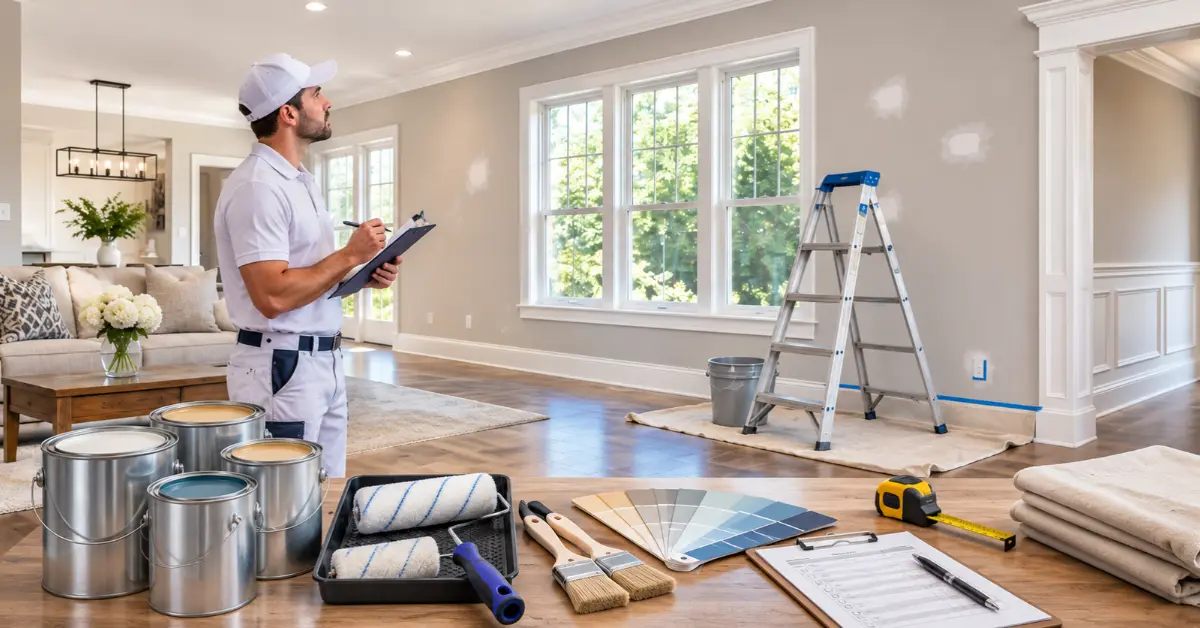
What to Expect from Professional Interior Painters
Hiring a painter is easier when you know what a well-run project looks like. Here is what you should expect from the first call to the last day.
- A clear project assessment. Someone looks at your rooms, asks questions, and tells you plainly what they see, including problems such as stains or cracks that need attention first.
- A detailed painting estimate. It should be in writing and list the rooms, surfaces, preparation, products, number of coats, and anything left out.
- A project timeline and schedule. You should know the start date, roughly how long each room will take, and how drying time fits in. A good contractor also tells you what happens if a hidden repair appears.
- Protection for furniture and floors. Your belongings are moved or covered and your floors protected before any work begins.
- Professional workmanship. Look for crisp lines, even coverage, and a smooth finish that holds up under both daylight and lamplight.
- Communication during the project. You should have a clear point of contact, regular updates, and quick answers if you want to change a color or the scope.
- A final inspection and walkthrough. You go through each room with the crew lead, point out anything to touch up, and sign off only when you are satisfied.
Ready to talk through your rooms? Contact us to request an interior painting estimate for your New Jersey home.
FAQs
It depends on the wall area, the number of rooms, the condition of the walls, the paint and finish you choose, the number of coats, whether ceilings and trim are included, and the complexity of the job. Because those vary so much, an accurate figure comes from a written estimate after the rooms have been seen.
Room size, the amount of preparation, drying time between coats, and the complexity of the job all play a part. A small, well-prepared room can go quickly, while a room needing repairs, primer, and several coats takes longer. Your estimate should include a realistic timeline.
There is no fixed schedule. Busy areas such as kitchens, hallways, and kids' rooms wear faster and tend to need attention more often. Bedrooms and low-use rooms can go considerably longer. Scuffs, stains, fading, and peeling are the signs it is time, and paint quality affects how long a finish lasts.
There is no single best one. Flat or matte suits ceilings and quiet rooms, eggshell works in most living spaces, satin handles busier areas, and semi-gloss suits trim and moisture-prone rooms. The right pick depends on how the room is used and the condition of the walls.
Fresh, well-done paint can make a home look cared for and move-in ready, which supports its appeal to buyers and renters. How much it affects the price depends on the property and the market, so it is better seen as improving presentation than as a guaranteed return.
If you have trouble with color selection, worry not. We are available to ensure that you get the ideal shades for any space. Our use of highly durable paints guarantees that your space will be stunning and pocket-friendly for years to come. Additionally, with years of experience, we ensure that our paints suit the overall style of modern and traditional homes or even offices.
Our home interior painting services help homeowners create spaces that match their style and preferences.
Our professional and trained team clears every mess and performs the prep work. You can trust our team of experts to get the job done quickly and efficiently, guaranteeing nothing but the highest quality.
Our experienced interior paint contractors focus on delivering a smooth and hassle-free painting experience from preparation to the final inspection.
Let Us Work To Improve Your Building